URD President: Unity is a Strategic Necessity for the Muslim World
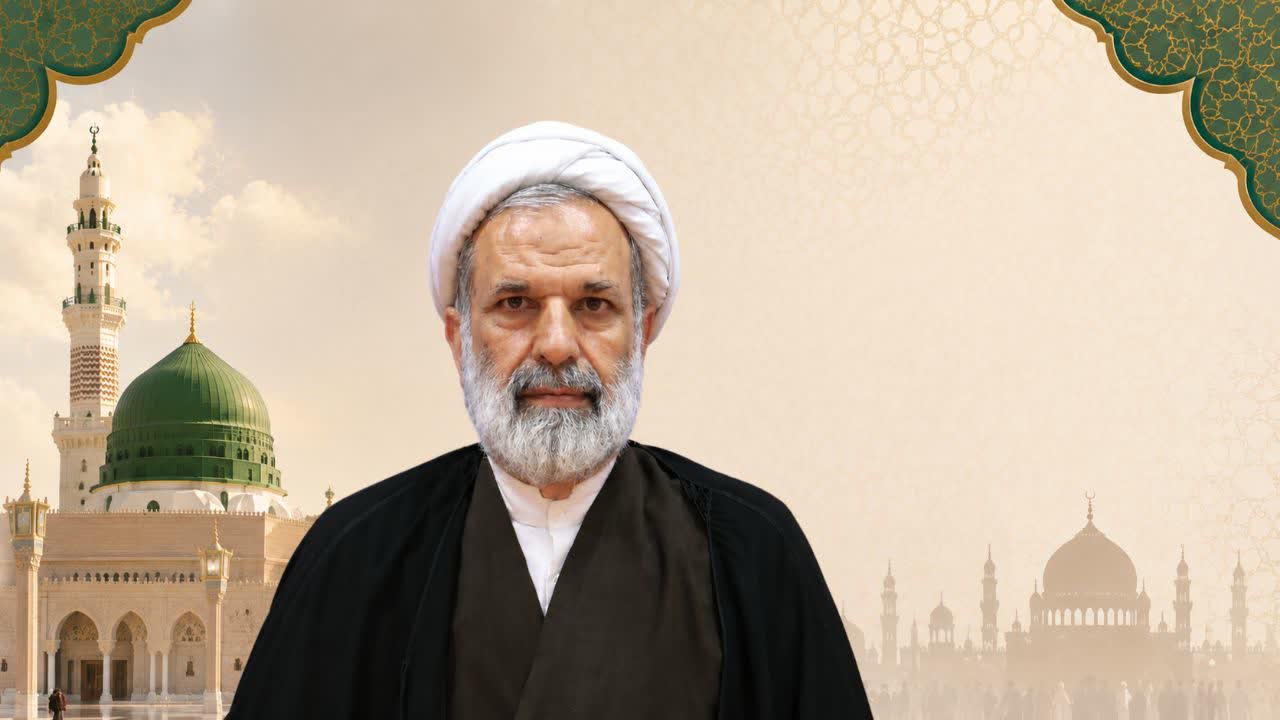
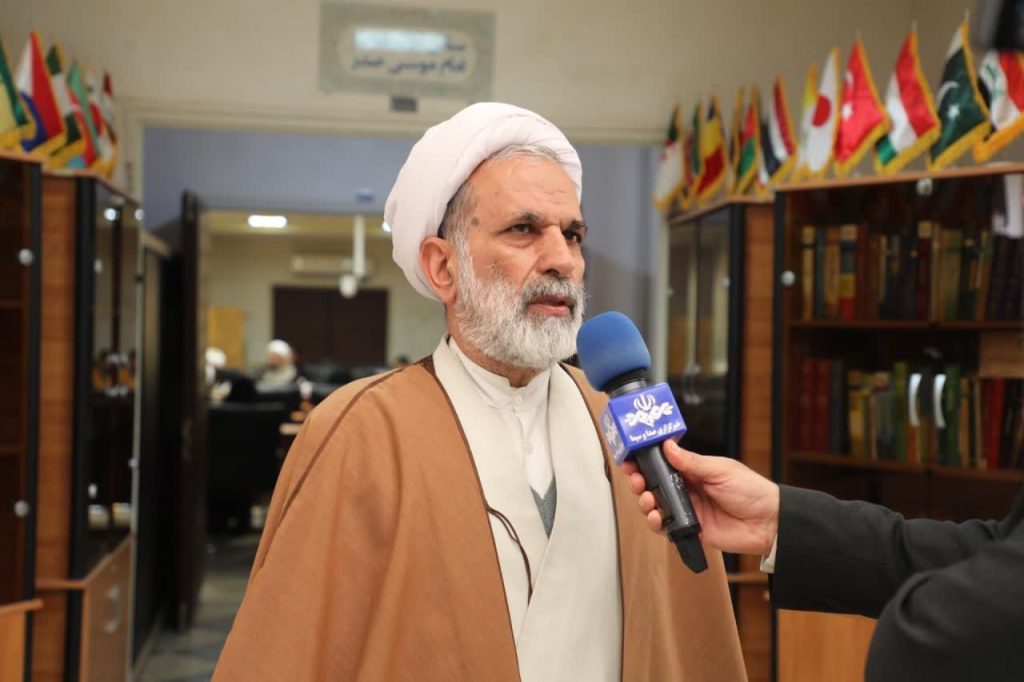
Hojjat al-Islam Dr. Mostafa Jafartayari, President of the University of Religions and Denominations, in an interview marking the arrival of “Unity Week”—which coincides with the 1500th anniversary of the birth of Prophet Muhammad (PBUH)—stated: “Unity Week is a precious opportunity to review the Prophetic tradition and rethink the relations within the Islamic world.”
While congratulating on the birth of the Holy Prophet (PBUH) and Imam Ja’far al-Sadiq (AS), as well as the occasion of Unity Week, Dr. Jafartayari added: “Undoubtedly, the coincidence of Unity Week with the 1500th anniversary of the birth of the Prophet (PBUH) is a historical call for an Ummah that today, more than any other era, is exposed to the storms of divisiveness and colonial conspiracies.”
He continued: “During his lifetime, despite all the hostilities and obstructions, the Prophet of Mercy (PBUH) was the axis of unity that gathered the scattered Arab tribes under the banner of Monotheism (Tawhid). Today, too, the Islamic world, to overcome identity, political, and security crises, is compelled to return to that precious Prophetic jewel—namely, ‘unity based on commonalities’ and ‘empathy beyond sectarian borders.’ Unity Week is a blessed legacy from Imam Khomeini that served as a decisive call to end manufactured hostilities between Islamic denominations.”
The President of the University of Religions and Denominations explained: “We must consider Imam Khomeini the founder of the theory of ‘Strategic Unity’ in the Islamic world. Unlike some superficial currents that viewed unity as a tactical or temporary matter, he introduced it as a ‘vital principle’ and a ‘Quranic duty.’ Inspired by the noble verse, ‘Indeed, this, your nation, is one nation’ [21:92], he firmly believed that any ethnic, linguistic, or jurisprudential difference in the face of a common enemy, such as Arrogance (Global Imperialism) and Zionism, is not only meaningless but also counts as a betrayal of Islamic ideals.”
Dr. Jafartayari continued: “After him, the Martyr Leader of the Revolution (who, in this sensitive juncture, is a full role model for revolutionary generations) also continued this path with unparalleled insight. The Martyr Leader of the Islamic Revolution of Iran always emphasized that ‘unity does not mean ignoring intellectual and jurisprudential boundaries; rather, it means cooperation on common principles, mutual respect, and avoiding Takfir (declaring others apostates) and vilification.’ With complete vigilance, he always warned against the enemies’ intrigues in fueling conflicts and creating false labels.”
This seminary and university professor stated: “In fact, what we witness today as the discourse of unity in Iran and many Islamic countries is the result of the theoretical and practical struggles of these great figures who were able to transform unity from an abstract concept into a public demand and subsequently into a civilizational project—a project whose ultimate goal is the formation of a ‘Unified Ummah’ while preserving religious and cultural diversity. Undoubtedly, any discourse requires ‘intellectual infrastructure ’ and ‘capable executive forces’ to turn into objective reality. The University of Religions and Denominations, as one of the most important scientific institutions in the Islamic Republic of Iran, was founded with exactly this goal and mission, and today it has become a shining model for other Islamic countries.”
Dr. Jafartayari added: “With a deep understanding of the necessity of Taqrib (approximation of denominations), the University of Religions and Denominations has organized its activities at high levels, such as creating platforms for elite dialogue, training unity-oriented academic staff, and charting a model of approximation based on principles.”
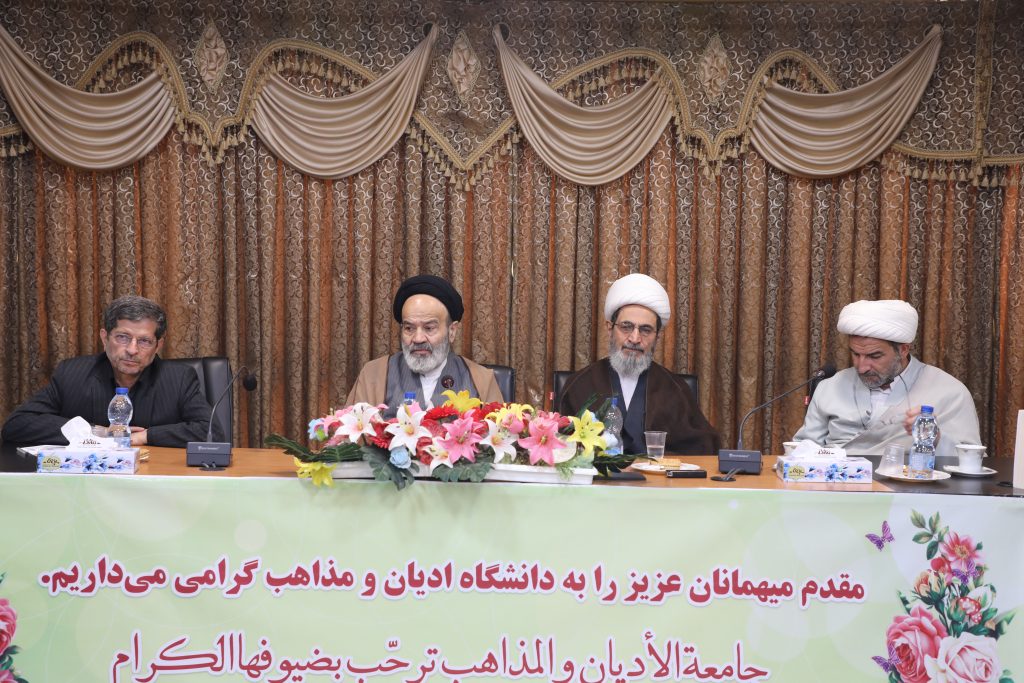
Regarding the platforms for elite dialogue, he said: “One of the most prominent actions of the University of Religions and Denominations is holding joint meetings and conferences with the presence of prominent Shia and Sunni scholars from various countries. For example, the symposia held with guests from around the world indicate this institution’s serious determination to provide a safe and scholarly space for exchanging views on the common challenges of the Islamic world. These events not only help in knowing each other better but also provide practical solutions for cooperation in economic, cultural, and even security spheres.”
Regarding the training of unity-oriented academic staff, the President of the University of Religions and Denominations stated: “One of the most important assets of any movement is expert and committed human resources. By creating innovative disciplines, the University of Religions and Denominations has trained a generation of researchers and graduates who are not only proficient in the depths of Islamic knowledge but, by being aware of Misconceptions, Objections and emerging sects, can defend the sanctity of Islamic unity in the international arena and provide substantiated responses to those Objections. Today, these graduates are ambassadors of peace and empathy in different parts of the world.”
Regarding charting the model of principle-based approximation, he explained: “The responsible officials of this university have repeatedly emphasized that the approximation of denominations never means retreating from true beliefs and established religious principles; rather, the goal is that by relying on the common heritage (the Holy Quran, Prophetic Sunnah, and the Sira of the Ahl al-Bayt (AS)) and by utilizing rational and ethical methods, we marginalize jurisprudential and theological differences and unite on the axis of ‘enemy recognition’ and ‘justice-seeking.’ This approach is derived from Quranic verses and the practical tradition of Imam Ali (AS), who in the most difficult circumstances, preferred the unity of the word over division so that the sanctity of Islam would not be endangered.”
In the end, Dr. Jafartayari added: “The horizon ahead, despite all the difficulties and obstacles that the enemies and their internal agents create, is bright, because this path is the path of the Prophets and Divine Saints. The experience of the last four decades has shown that wherever Islamic unity has taken on the color of reality, the Ummah has achieved great successes, and wherever division and strife have taken hold, the result has been nothing but loss and foreign domination.”
He continued: “My final message is that today, more than ever, we need ‘unity-oriented rationality.’ Unity Week is a ‘social exercise’ and a ‘school of self-improvement.’ I hope that all of us, especially the young generation and academics, by modeling the Prophetic Sira and following the guidance of Imam Khomeini, the Martyr leader, and His Eminence Ayatollah Imam Sayyid Mujtaba Khamenei, will be trustworthy guardians of this precious heritage, and in the shadow of unity, pave the way for the emergence of the Promised Savior and the realization of the New Islamic Civilization.”