Academic Seminar Held on “Why Has Peace Become Difficult?”
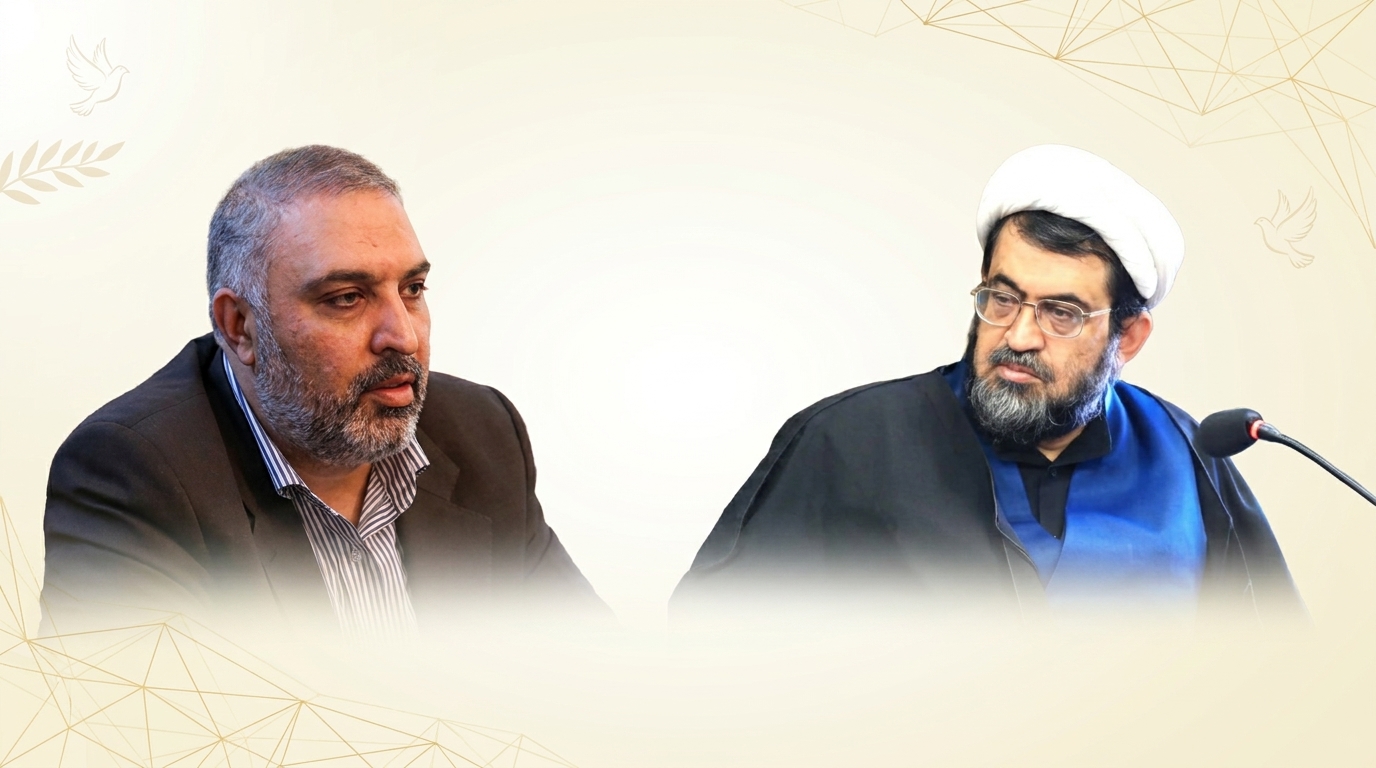
An Academic Webinar entitled “Why Has Peace Become Difficult? The Role of Religion, Universities, and Cultural Diplomacy in Today’s World” was held on Monday, September 21, 2026, on the occasion of the International Day of Peace.
Dr. Hamidreza Shariatmadari, faculty member at the University of Religions and Denominations, and Dr. Reza Gholami, Cultural Counselor of the Islamic Republic of Iran in Austria, discussed the obstacles to peace in the contemporary world and the potential of religion, universities, and cultural diplomacy to promote dialogue and mutual understanding.
In his remarks, Dr. Hamidreza Shariatmadari, referring to debates In Iranian society concerning the relationship between peace, negotiation, and war, emphasized the need to avoid absolutist approaches to these concepts. He stated that neither peace nor war can be defended absolutely and under all circumstances; rather, what should be given priority are justice, the public good, national interests, global interests, and ethical, human, rational, and faith-based values.
Emphasizing that preferring peace does not mean accepting every agreement under every circumstance, he added that peace can be desirable when it is just, does not constitute surrender, serves the interests of both parties as far as possible, and offers prospects for durability and sustainability. From this perspective, decisions concerning peace or negotiation require rational judgment, prudence, and careful consideration of the circumstances and requirements of each particular situation.
The faculty member of the University of Religions and Denominations further referred to a number of Qur’anic verses concerning war and peace, noting that such verses should be understood in light of the conditions and qualifications found throughout Islamic teachings. He stressed that verses concerning fighting and jihad should not be interpreted in isolation or in absolute terms without taking into account other Qur’anic verses and broader Islamic principles. According to him, Islamic teachings emphasize a preference for peace and its acceptance whenever conditions for peace and peaceful coexistence are available.
Dr. Shariatmadari also emphasized that peace should not be understood as surrender or as relinquishing rights, stressing the need to consider both justice and the public interest. He further addressed the role of social, educational, and academic institutions in promoting a culture of peace, noting that families, educational systems, religious institutions, seminaries, and universities can contribute to educating future generations on the basis of dialogue, peaceful engagement, and peaceful coexistence.
He also highlighted the importance of public, cultural, and academic diplomacy. He noted that even when official relations between countries face tensions or restrictions, connections among universities, academic institutions, cultural organizations, and religious communities can continue and create openings for dialogue.
Dr. Shariatmadari emphasized that universities and cultural institutions can not only complement official diplomacy but also provide opportunities for dialogue on values such as peace, justice, freedom, and human rights. Through academic and intellectual exchanges, they can contribute to greater mutual understanding among different societies and religious communities.
In the second part of the session, Dr. Reza Gholami delivered a presentation entitled “Eighteen obstacles of Peace: A Multilevel Analysis of Individual, Institutional, and Ideological Barriers to Peace,” examining a range of obstacles to peace in the contemporary world.
At the outset of his presentation, Dr. Gholami described peace as one of the most important motivations underlying human efforts to build societies. He argued that understanding the difficulties of achieving peace requires attention to a broad range of individual, social, economic, technological, political, and institutional factors.
Dr. Gholami referred to excessive individualism, epistemic absolutism, the decline of rationality, domination in dialogue, unbalanced nationalism, insufficient structural conditions for peace, the political economy of war, the loss of effective human governance over emerging technologies, and the proliferation of weapons and new technologies of warfare.
He also identified environmental crises and competition over resources, the shortcomings of certain global governance institutions, the existing structure of the United Nations Security Council, challenges facing democracy, the North–South divide, double standards in addressing human rights, the neglect of restorative justice and unresolved traumas, the decline of intellectual engagement, consumerism, and the distortion of the mission of religions as other factors that can make the achievement of sustainable peace more difficult.
In concluding his remarks, the Cultural Counselor of the Islamic Republic of Iran in Austria emphasized that peace is not merely the absence of war but a positive condition that requires cultural, intellectual, economic, and political foundations.
Dr. Gholami categorized the obstacles to peace into three broad levels—cultural and social; economic and technological; and governance and rights—and stressed the importance of strengthening critical thinking, rational dialogue, ethical governance of technology, attention to restorative justice, and reconsideration of existing mechanisms of global governance. He also underlined the important role of religions in this regard, noting that religions can mobilize their ethical and unifying capacities in the service of peace. At the same time, he emphasized that religious communities should continuously reflect on their role and responsibilities in relation to peace.
The session concluded with an emphasis on the need to continue academic and intercultural dialogue on peace, strengthen the role of universities and religious and cultural institutions in promoting understanding among societies, and make greater use of the potential of academic and cultural diplomacy.